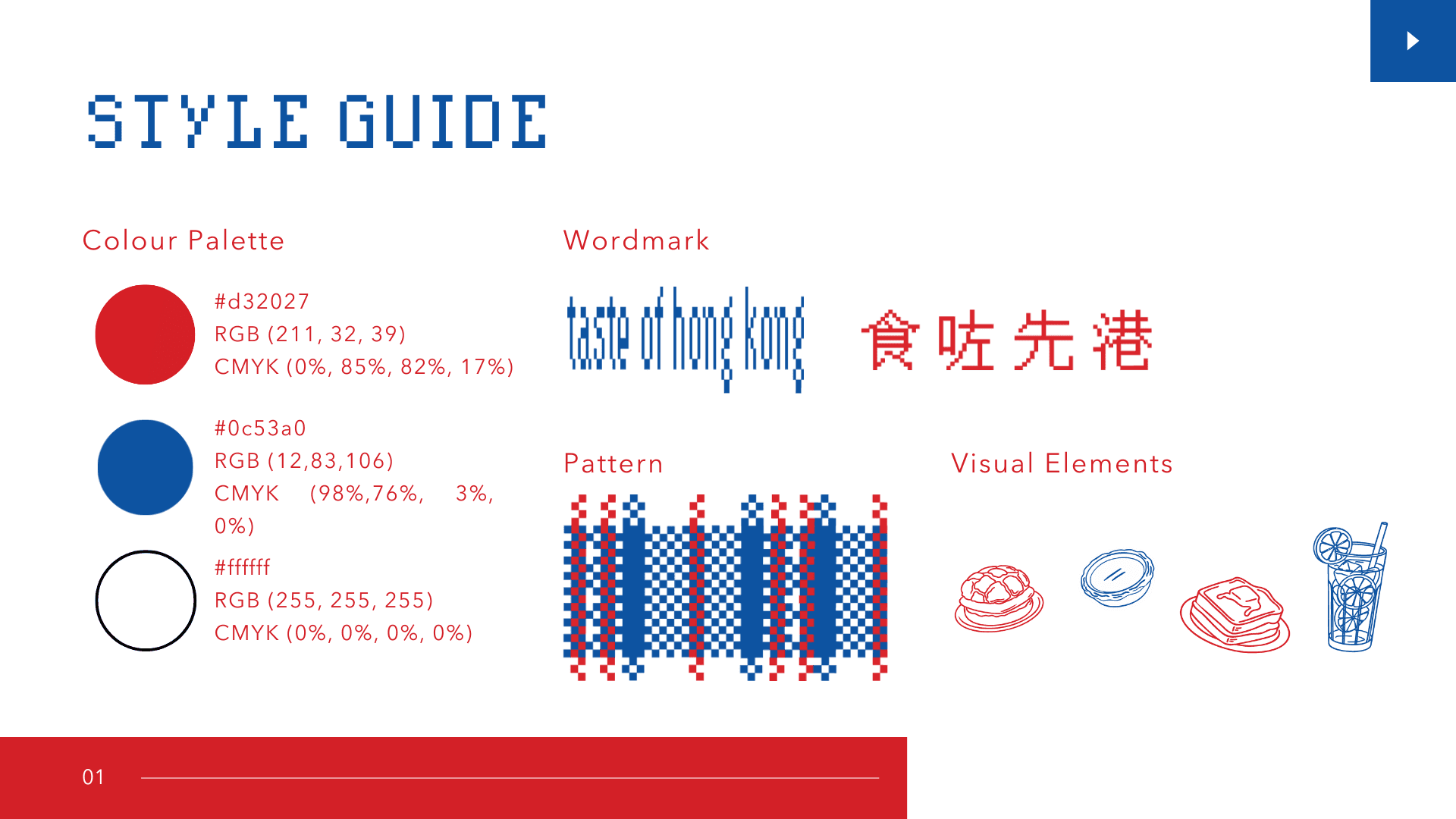
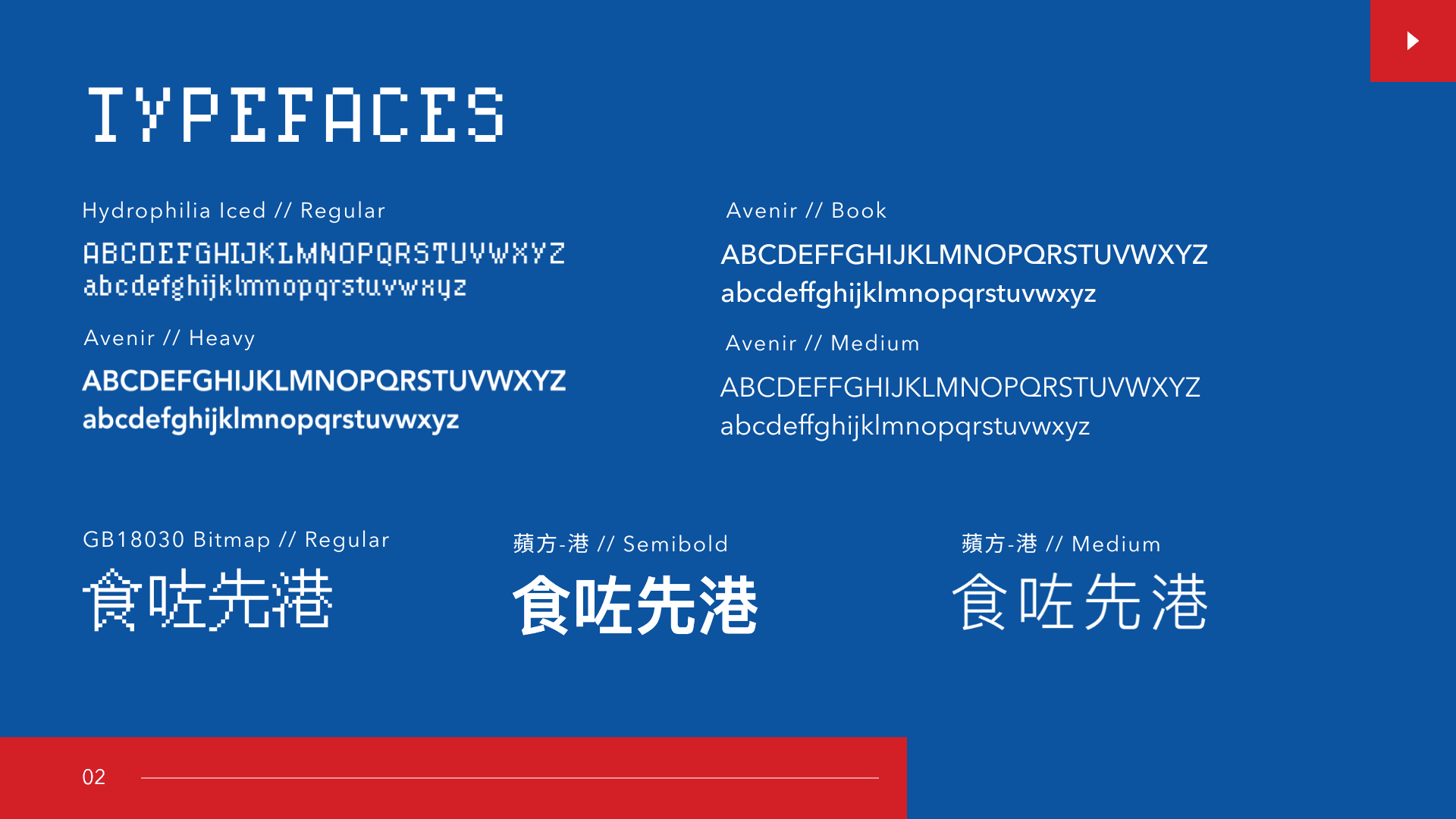
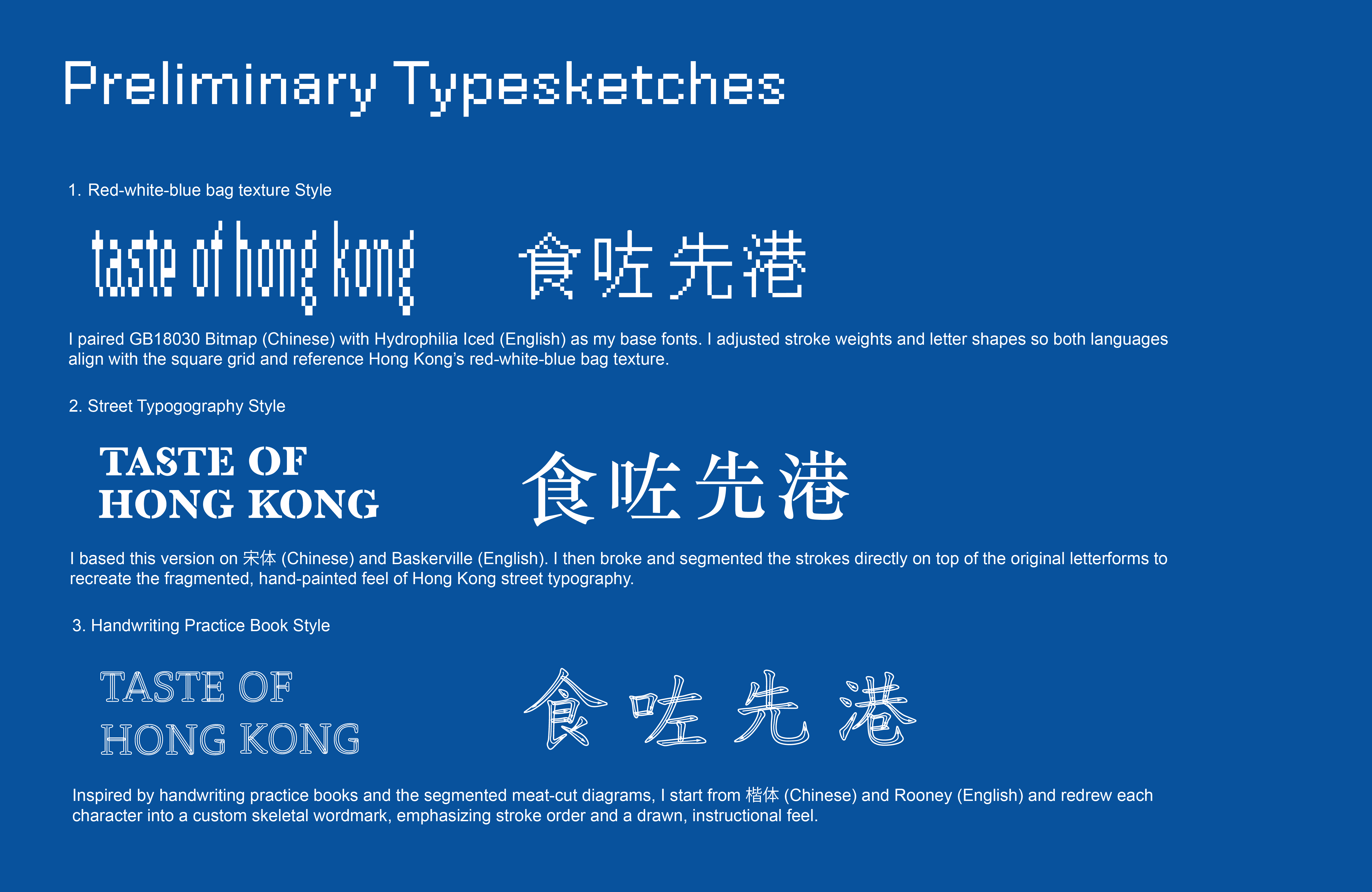
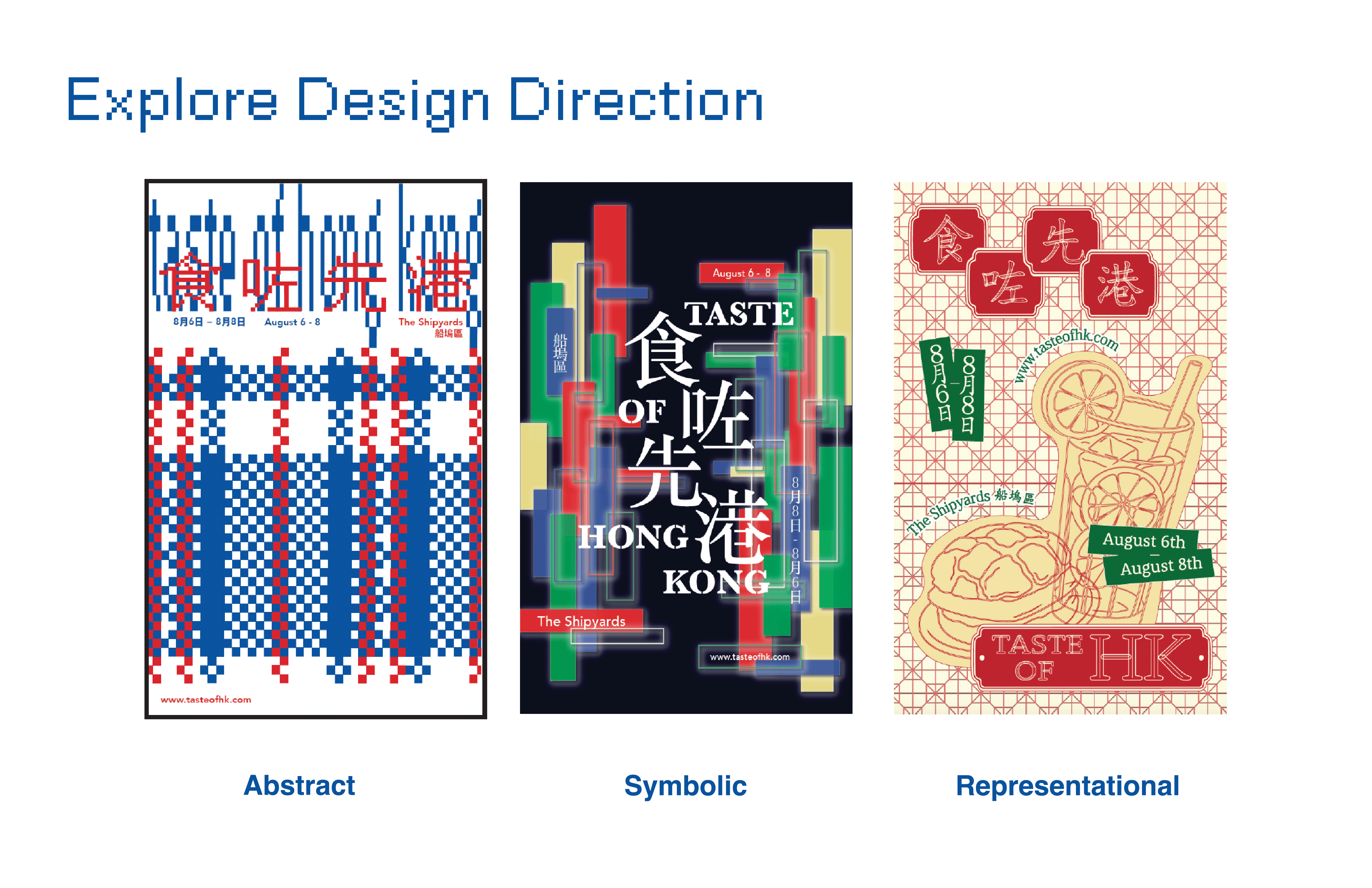
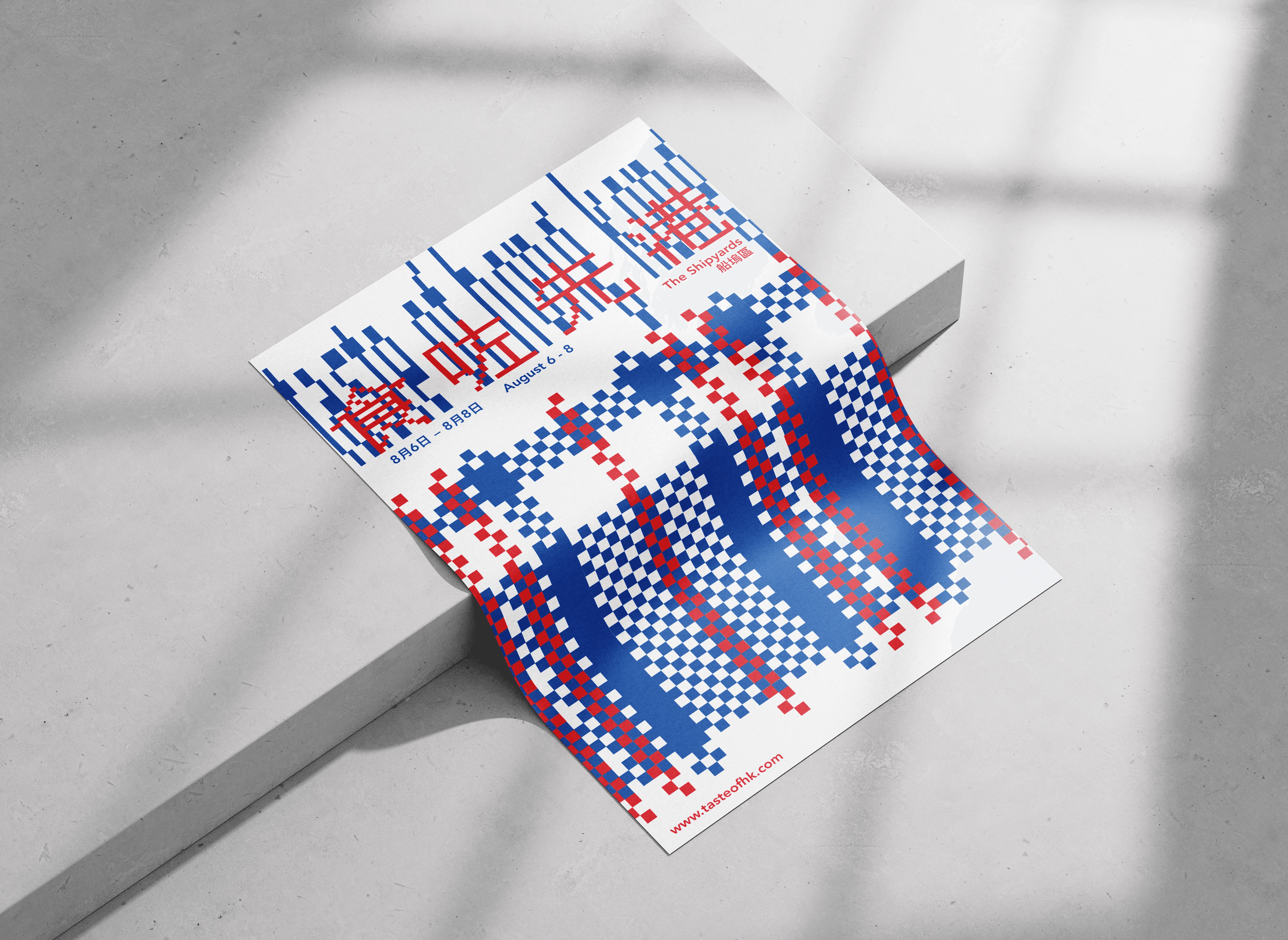
I began by researching the festival’s cultural purpose as a celebration of Hong Kong’s fusion of Eastern and Western influences. This process helped me identify key references such as red-white-blue bags, cafe food culture, and neon street signage as strong foundations for the festival tone. I tested abstract, symbolic, and representational approaches, while also experimenting with bilingual typographic systems by modifying Chinese and English base typefaces through stroke weight, structure, and fragmentation.
I was especially drawn to the red-white-blue bag as a defining cultural reference. Unlike more decorative symbols, this object is widely recognizable in Hong Kong as a marker of working class street culture, markets, and migration. It is affordable, durable, and common, much like the HK street food atmosphere at the heart of the festival, making it a powerful and meaningful foundation for the identity. Its bold grid structure also offered a strong visual system that could translate into typography, pattern, and layout.
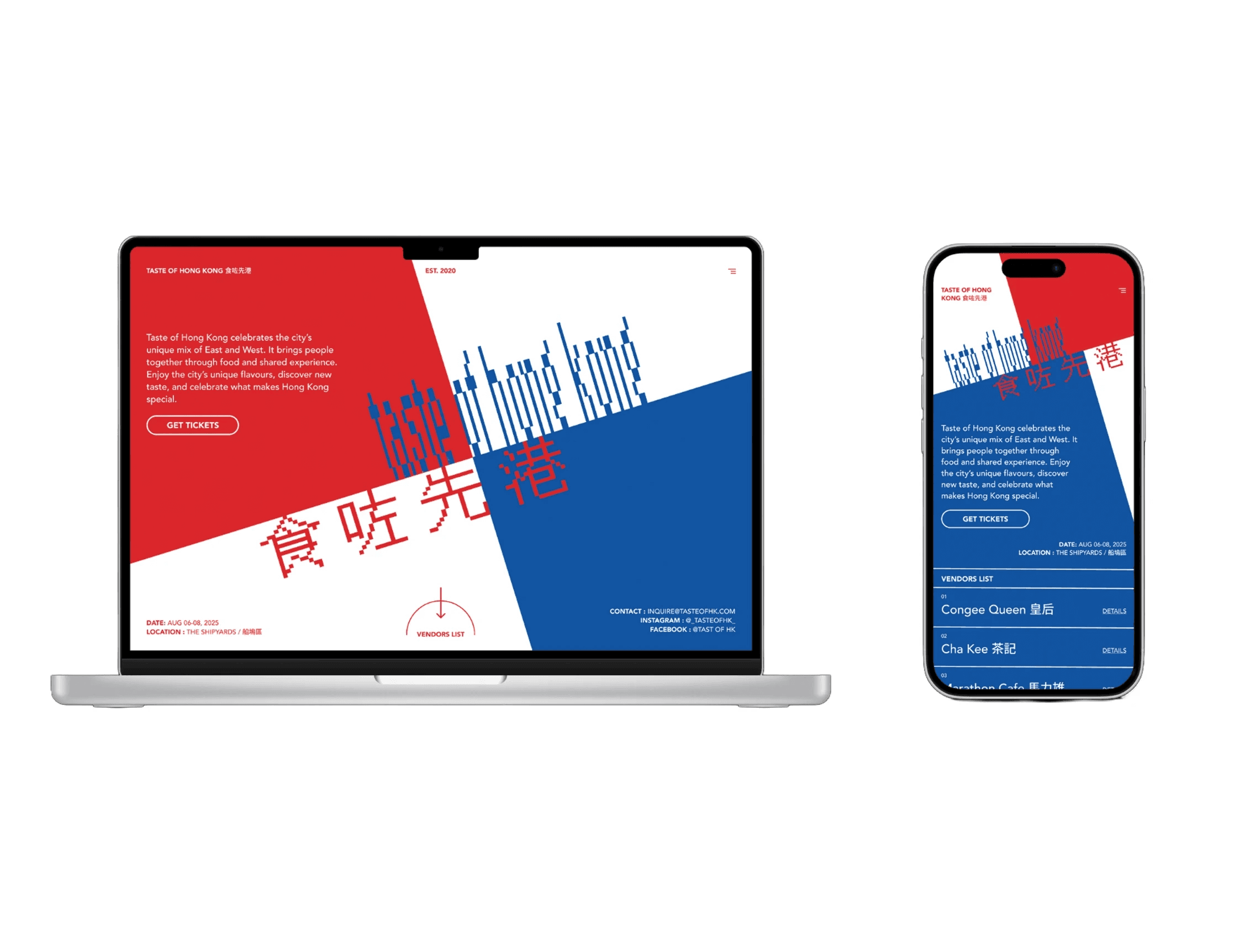
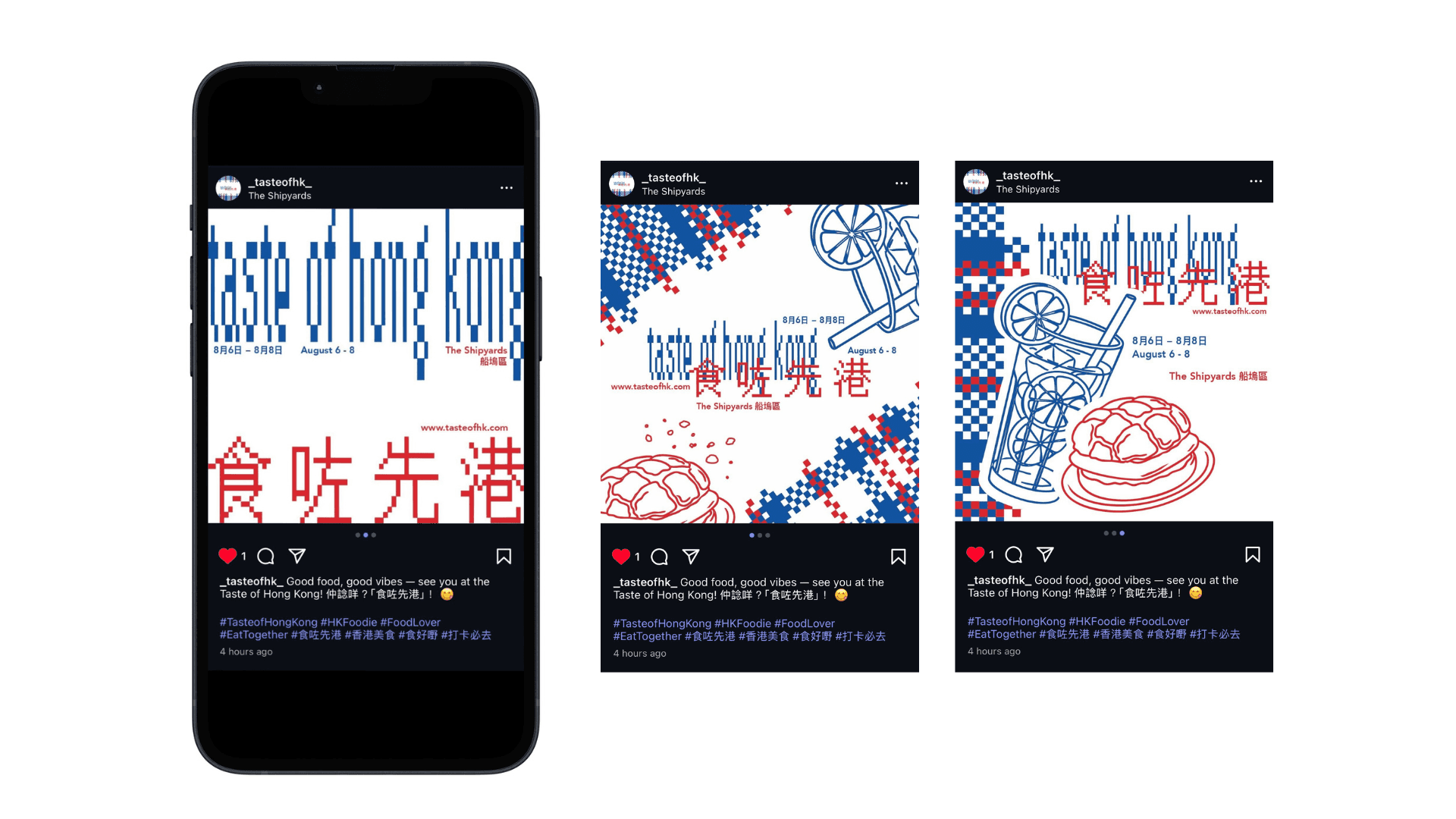
For pre event promotion, I designed Instagram posts and a landing page. Instagram targets teens and adults who respond to fast visual content, so I used illustration to make the identity instantly recognizable. The landing page provides a simple web and mobile space for all ages, combining essential information like event details, ticket access, and key links in a clear, accessible layout.
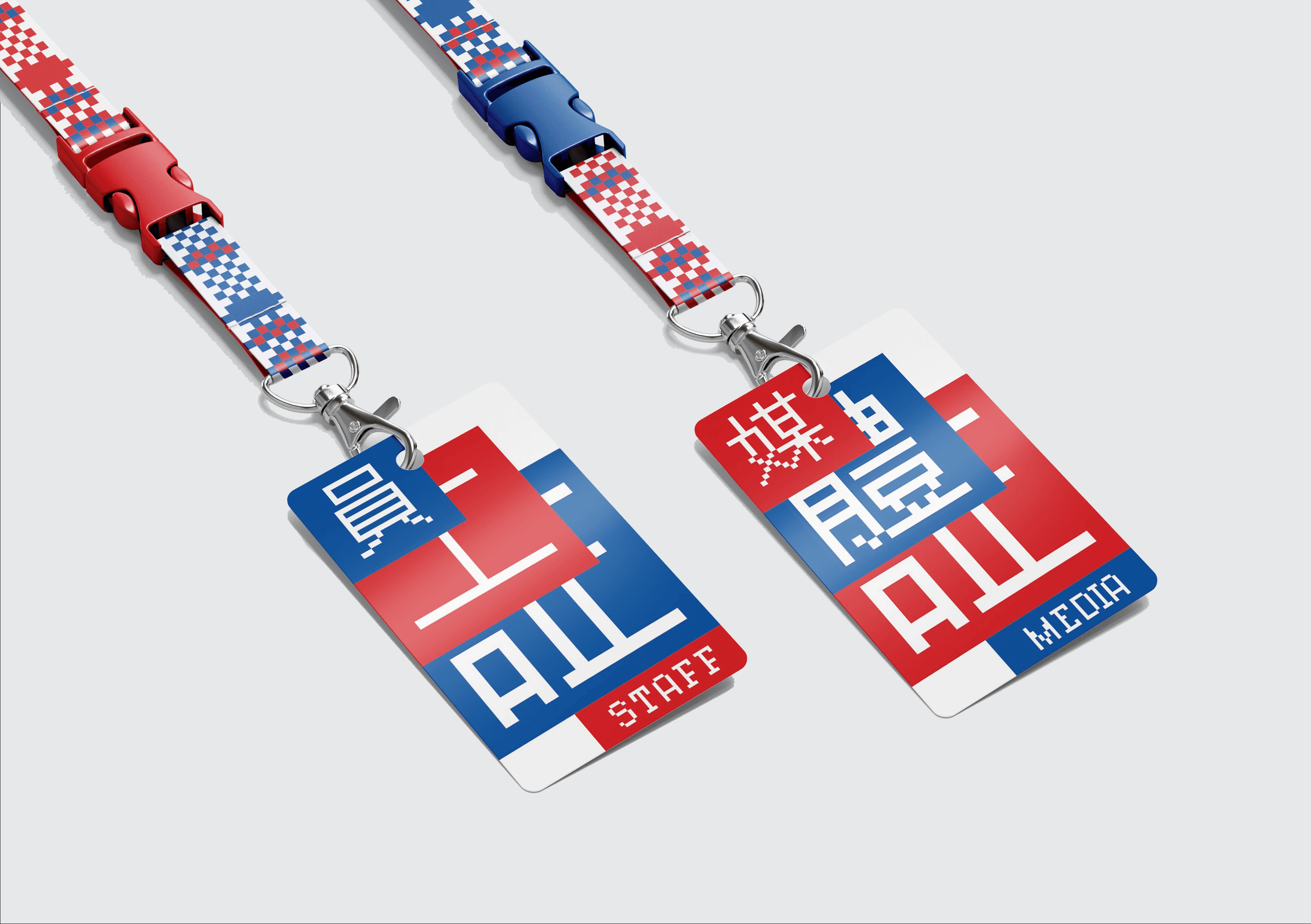
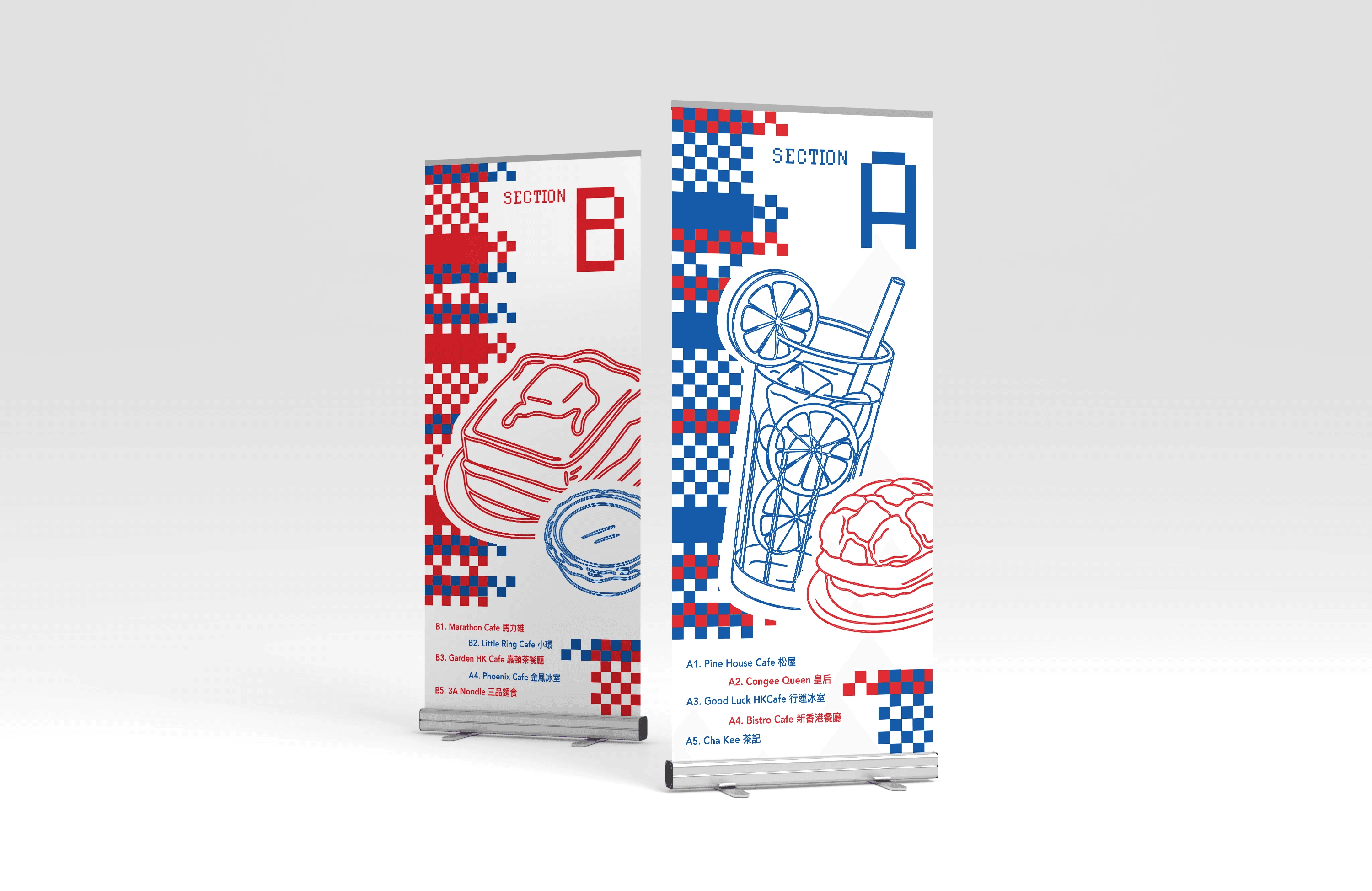
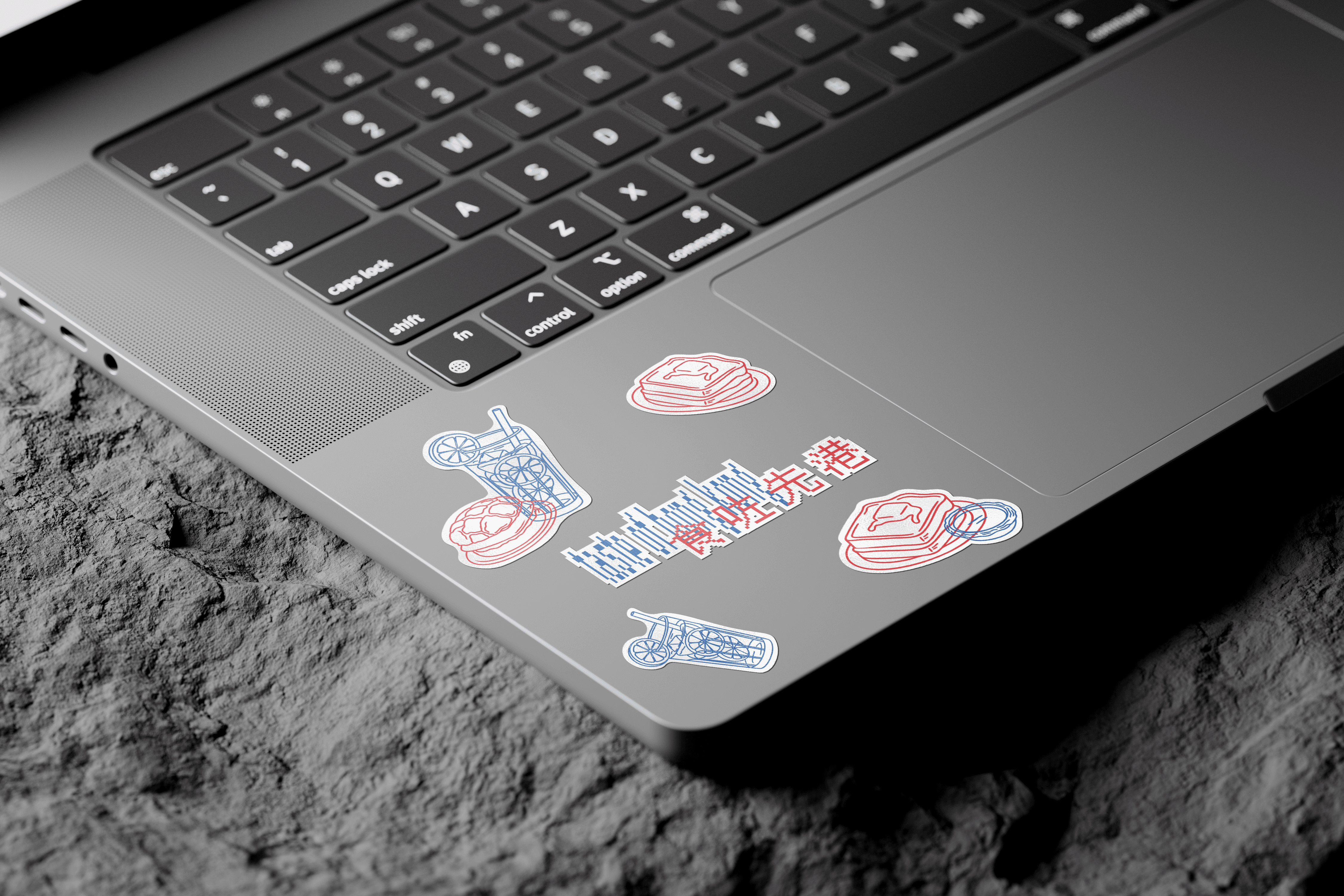
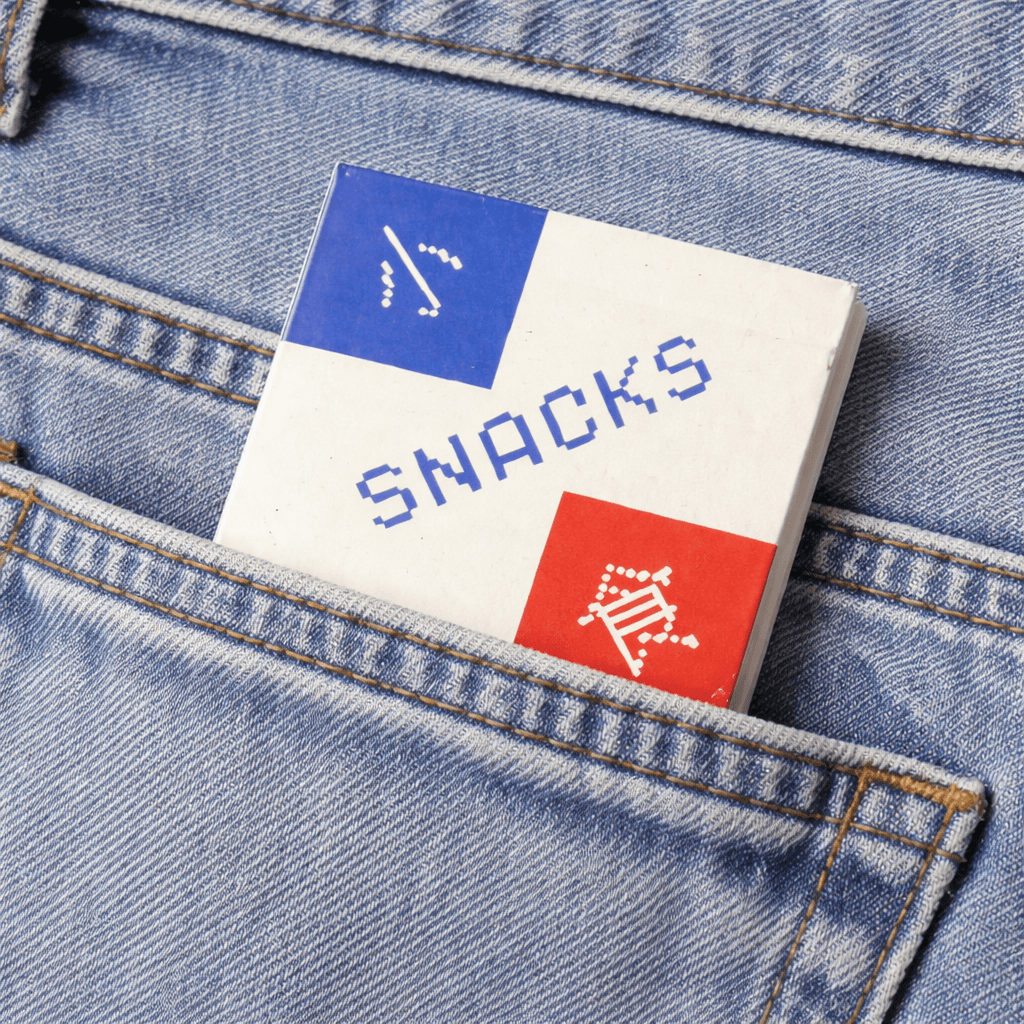
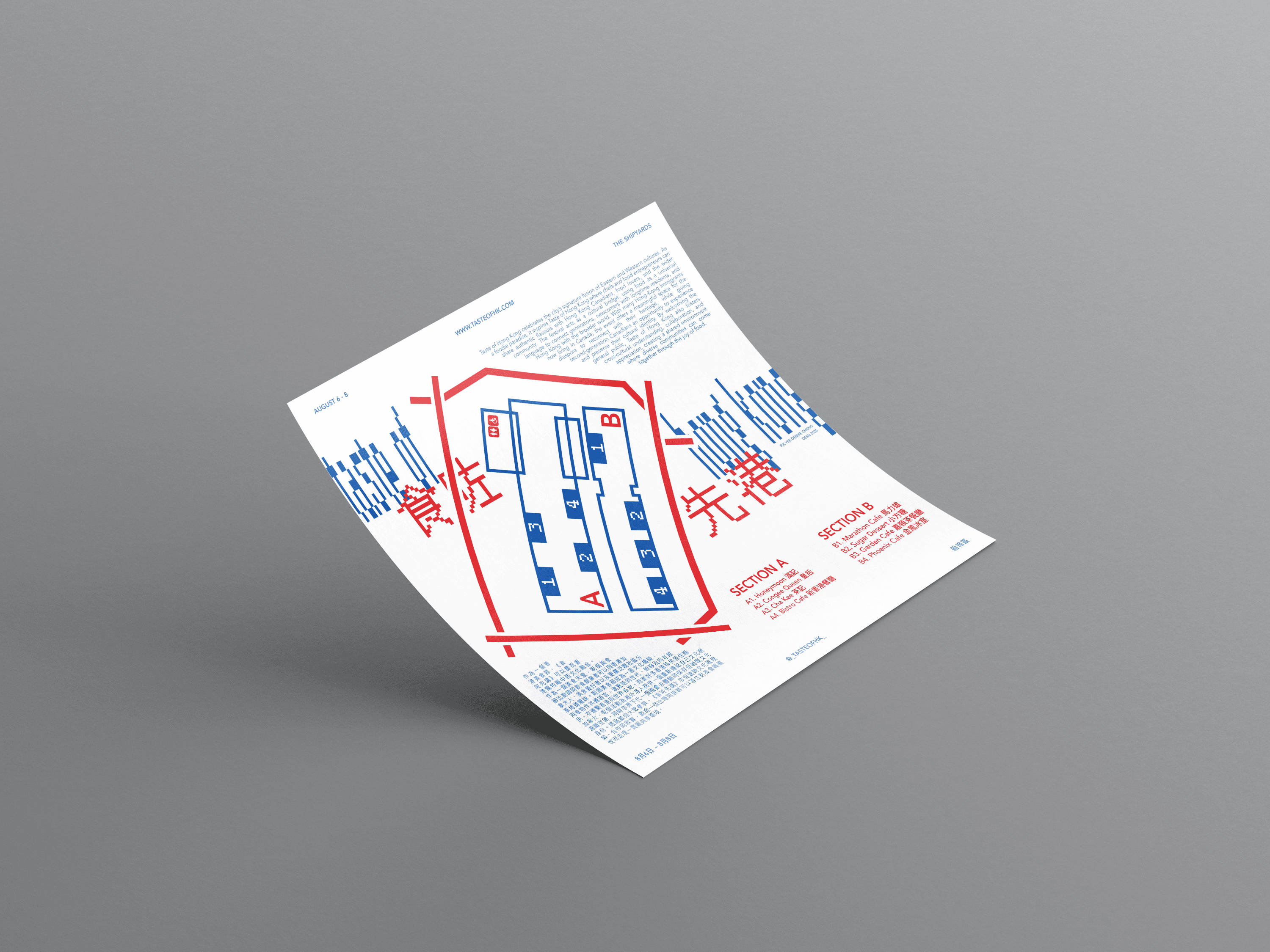
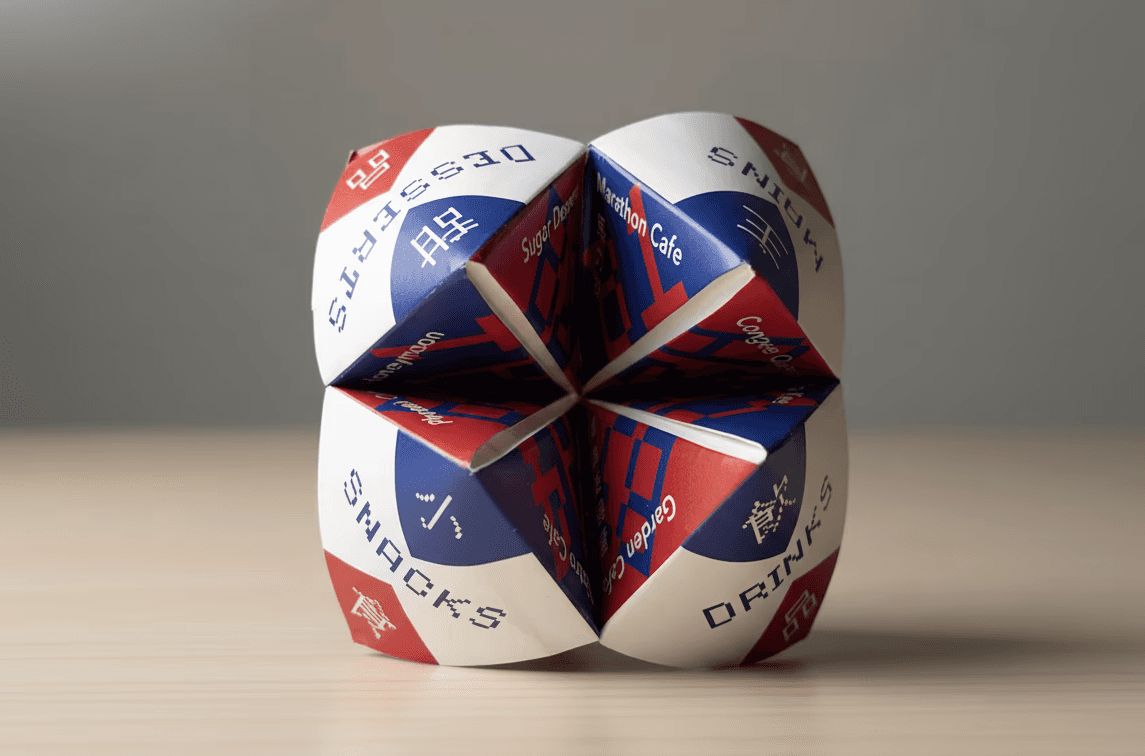
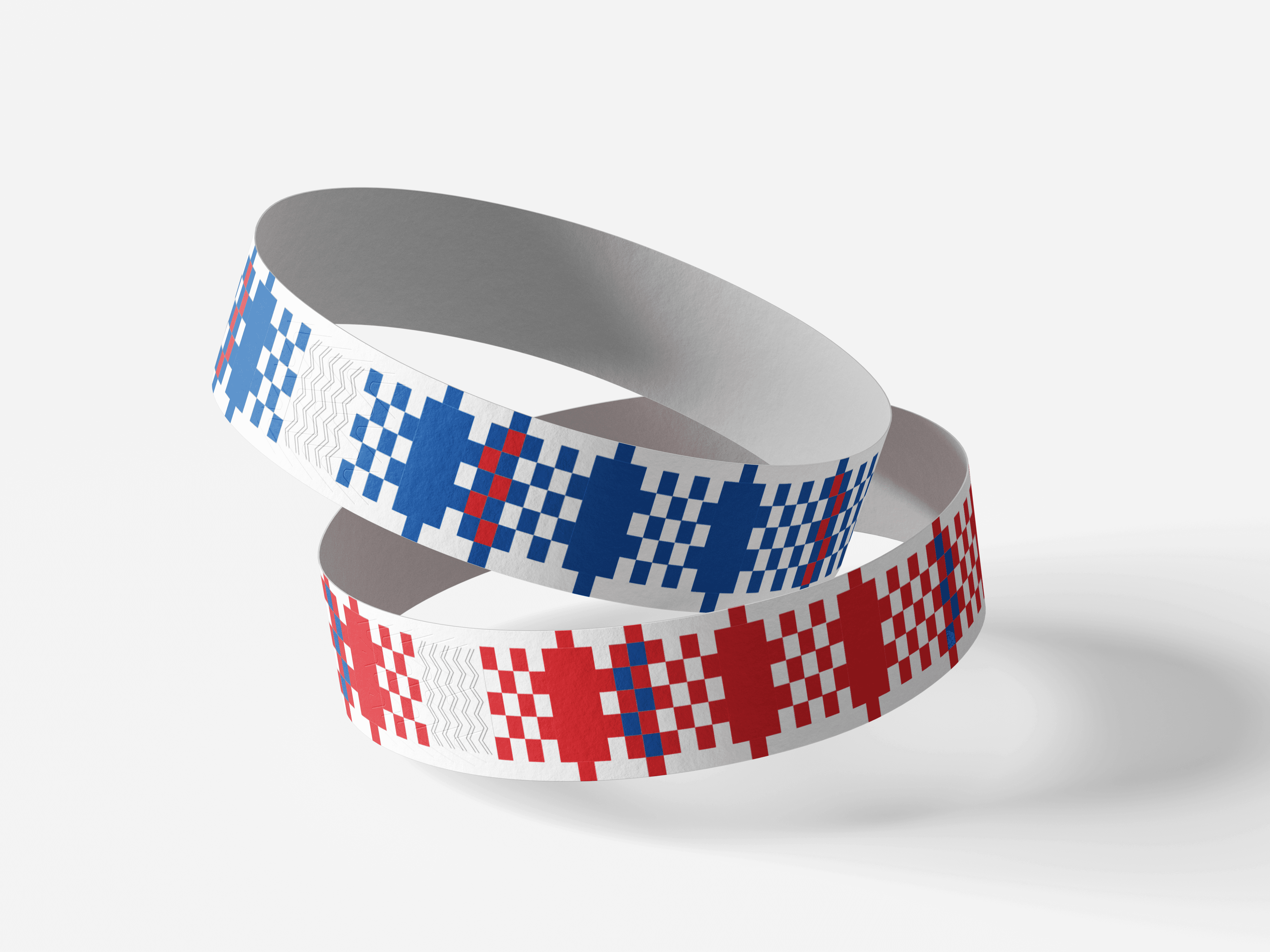
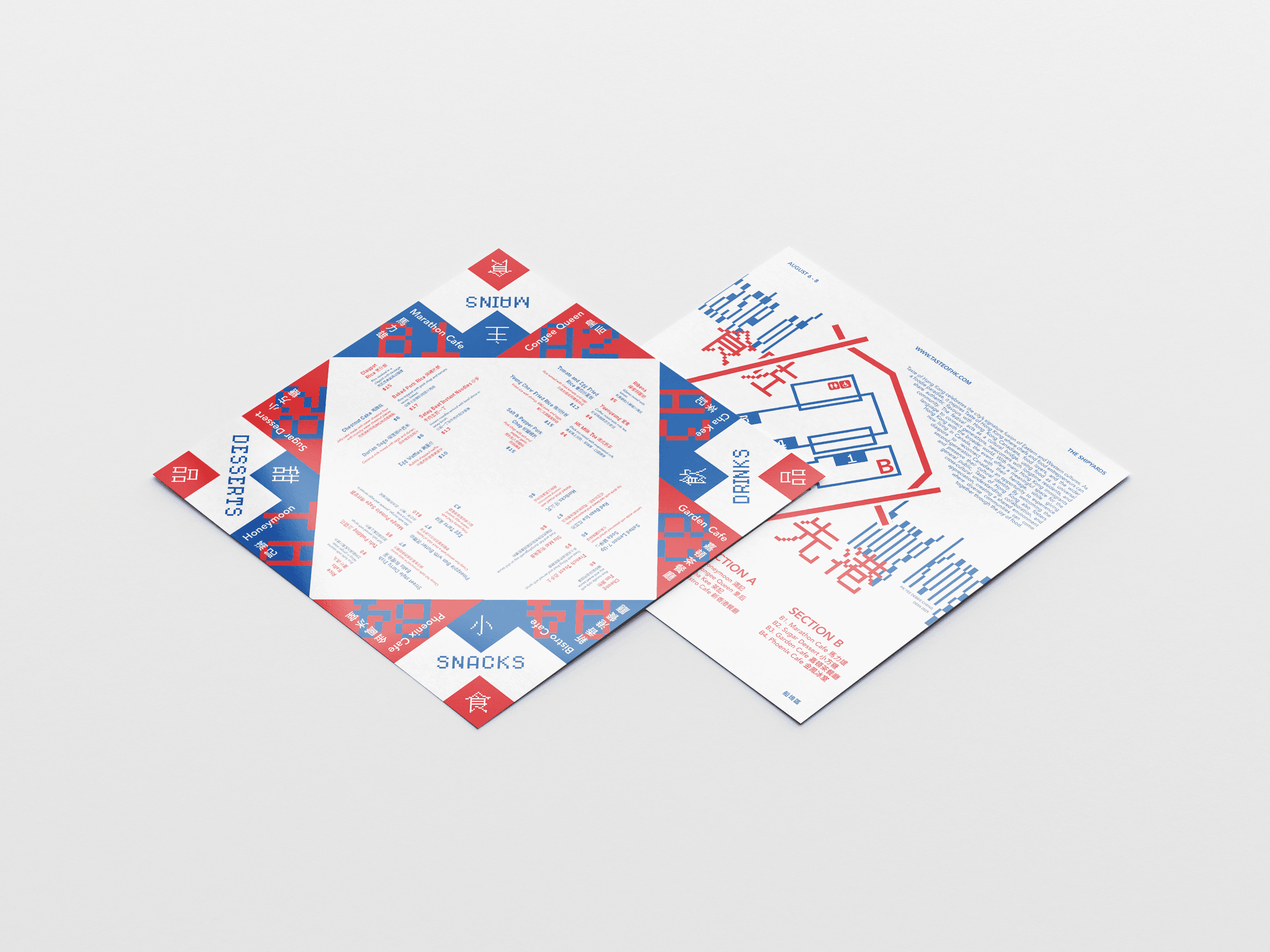
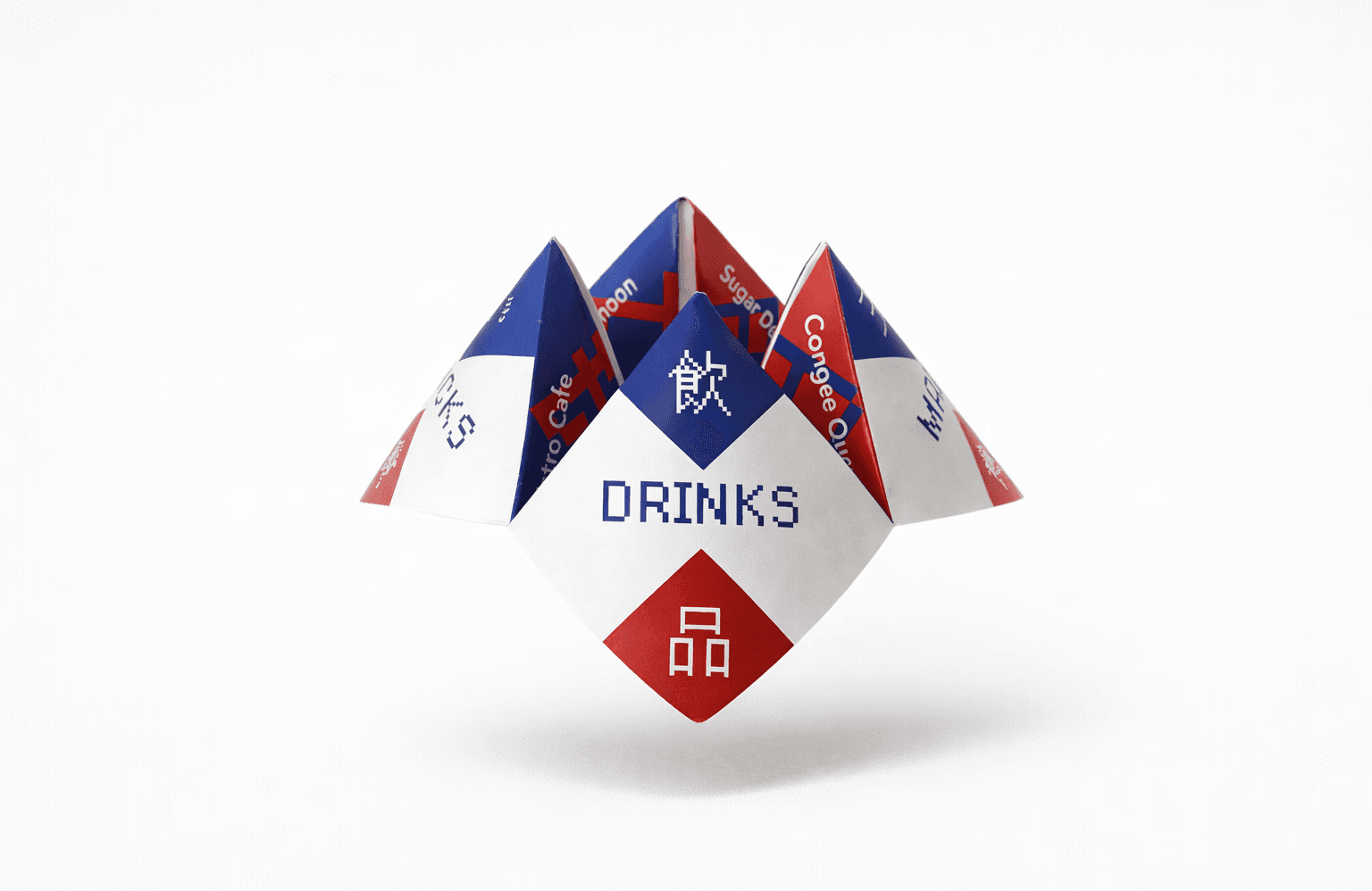
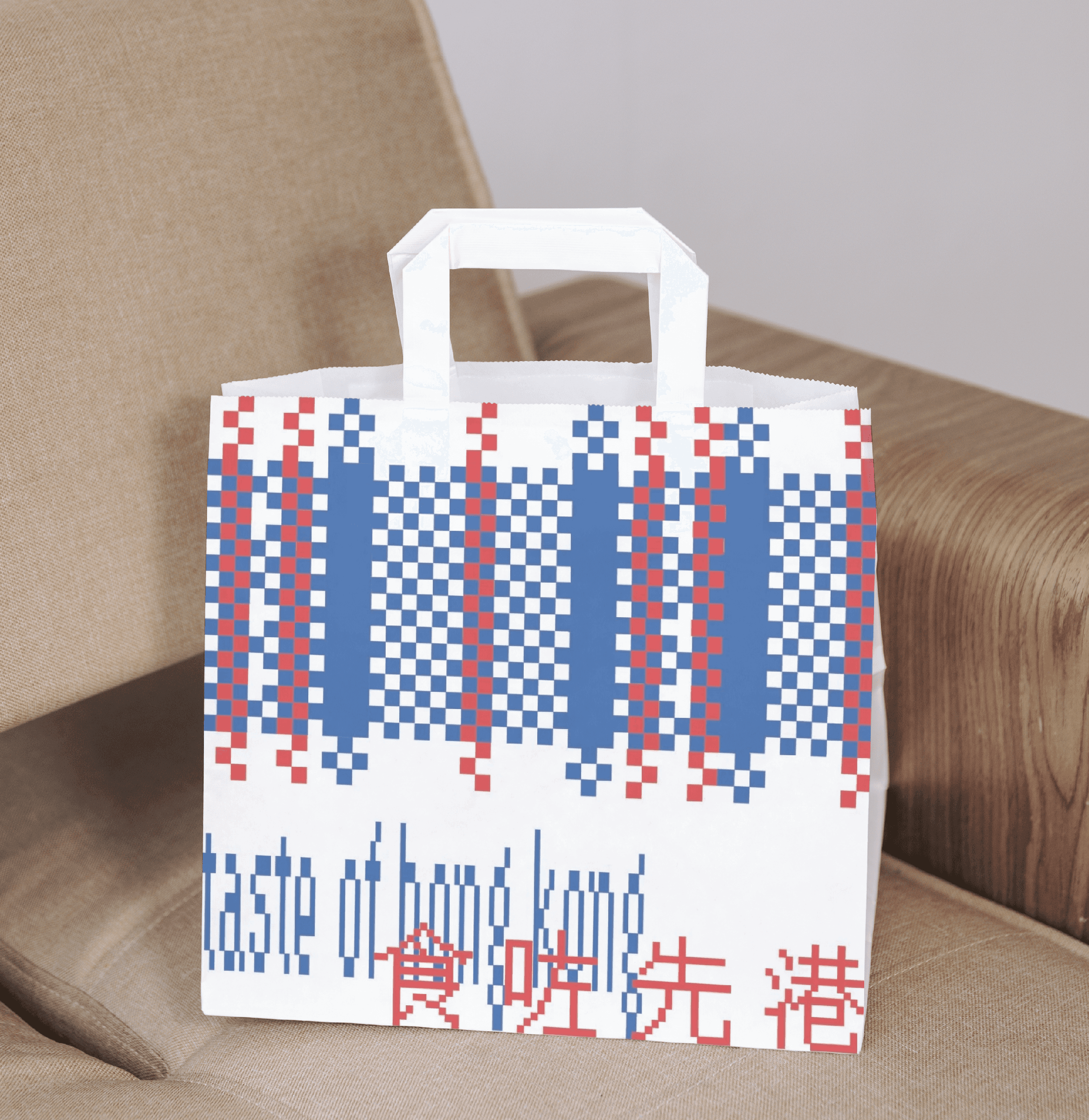
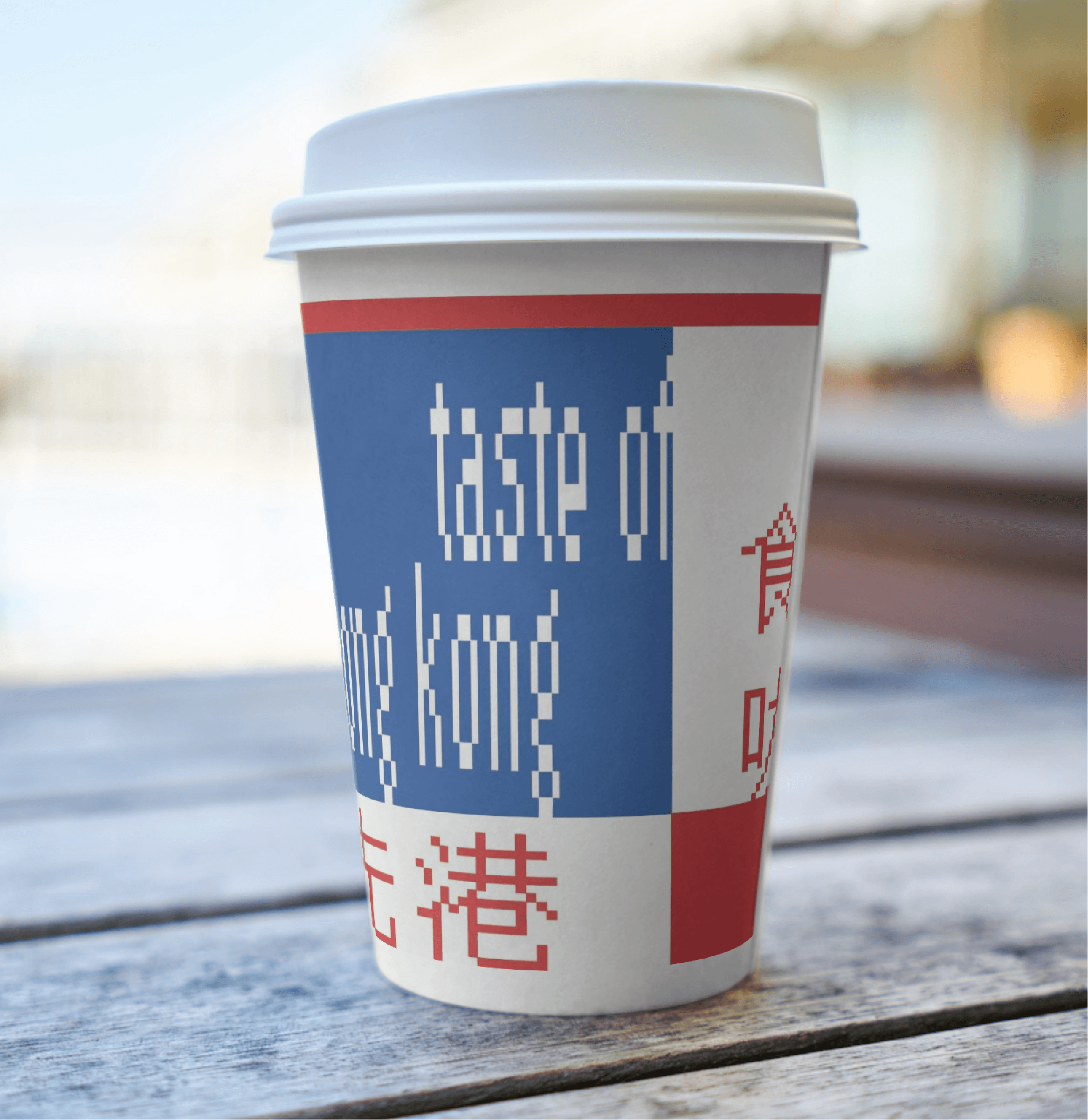
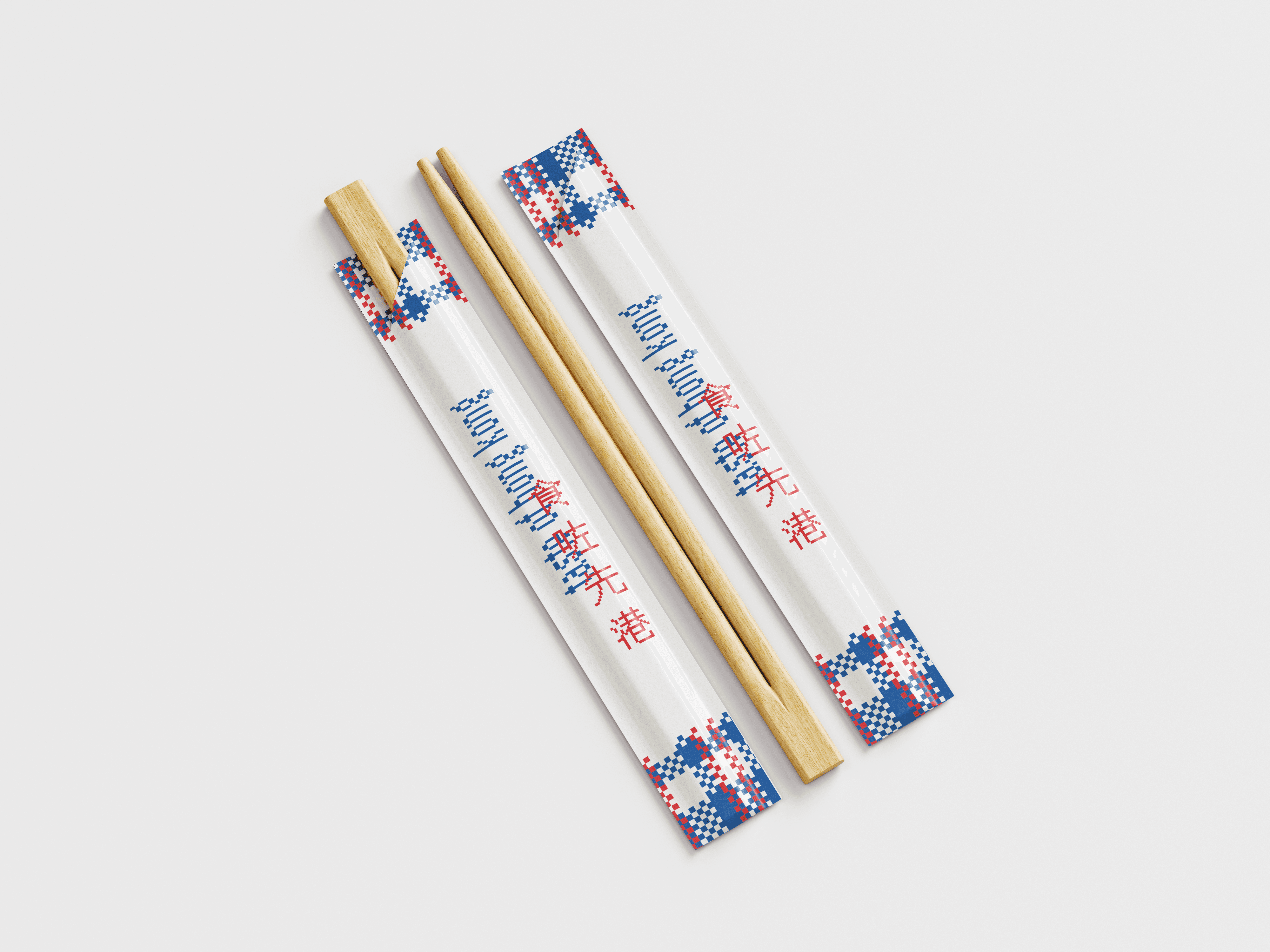
I applied the identity to practical on site elements that support navigation and visibility. Food packaging extends the brand across different vendors and keeps the identity visible as people carry food around. Standing banners label restaurant zones clearly to improve wayfinding and crowd flow. Stickers function as collectible souvenirs, while badges and lanyards organize staff and media and make roles easy to identify at a glance. Wristbands support entry control and double as reusable keepsakes, extending the brand experience beyond the festival. The Foodie Catcher is a folded print brochure used on site. It combines vendor information with key festival details, and when fully opened the back becomes a simple festival map showing the layout and vendor locations to support quick navigation.
I chose stickers and wristbands instead of clothing like hoodies because they are more affordable, lightweight, and practical for an on the go event, while still helping the brand spread through personal items. I also designed a Foodie Catcher brochure because most visitors come mainly to decide what to eat. Instead of a traditional program, the interactive format makes choosing easier and more fun by guiding users to a food category and revealing matching vendors, reducing decision fatigue while also helping them move through the space.
The biggest challenge was staying creative within strict limits. With a limited colour palette and a restrained shapes, I had to avoid designs feeling repetitive. Therefore, by changing scale, spacing, rhythm, cropping, and negative space, I can create a variety of different visuals while clearly reflecting the brand characteristics.
Another challenge was production limit. Through print testing, I learned that small text can't sit on fold lines because creases cause the ink to crack and become unreadable. Also, the paper weight needs to stay around 24 lb since thicker sheets can break when folded. These tests directly changed my layout decisions and material choices so the final foodie catcher stays functional and durable.