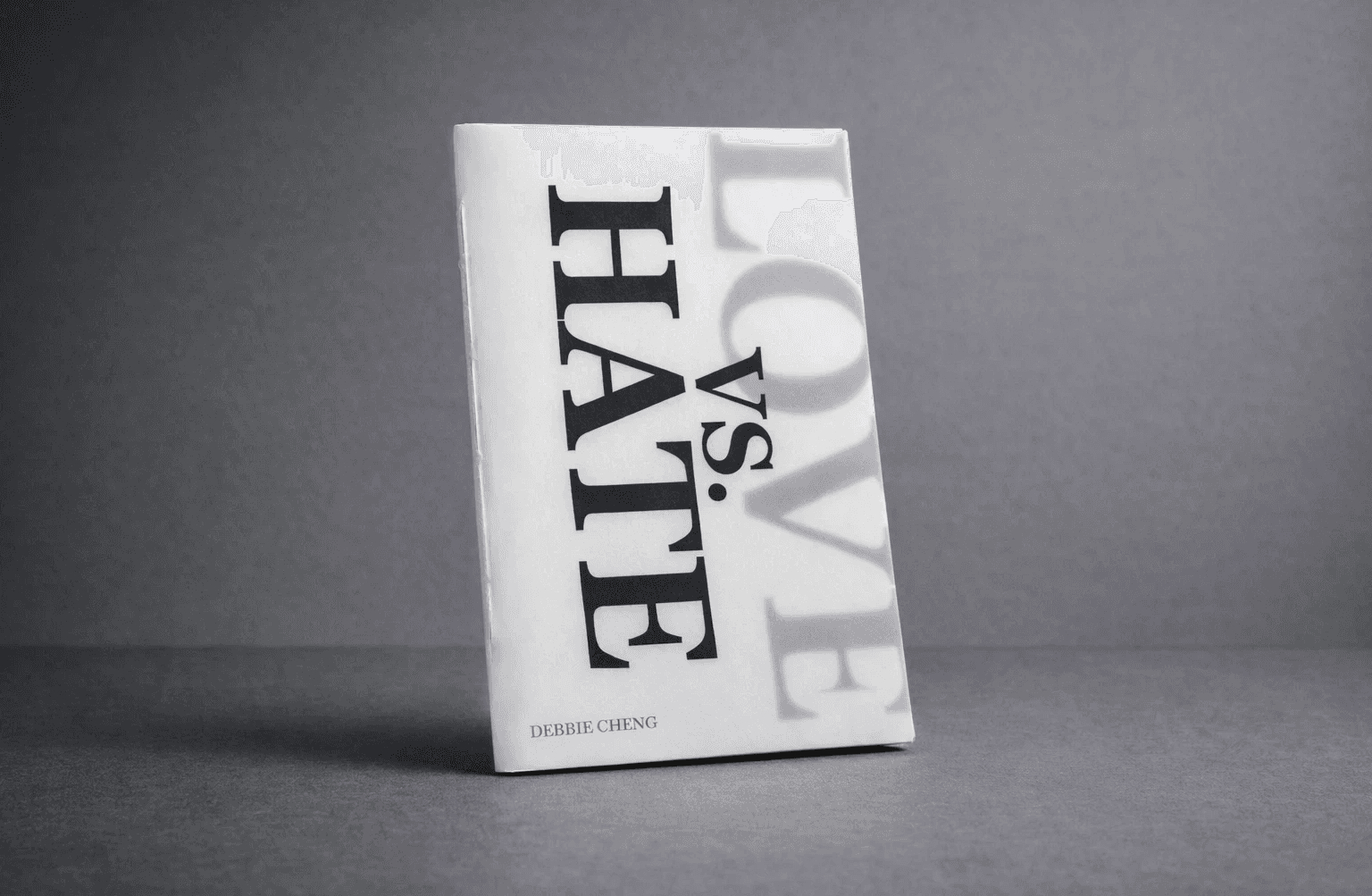
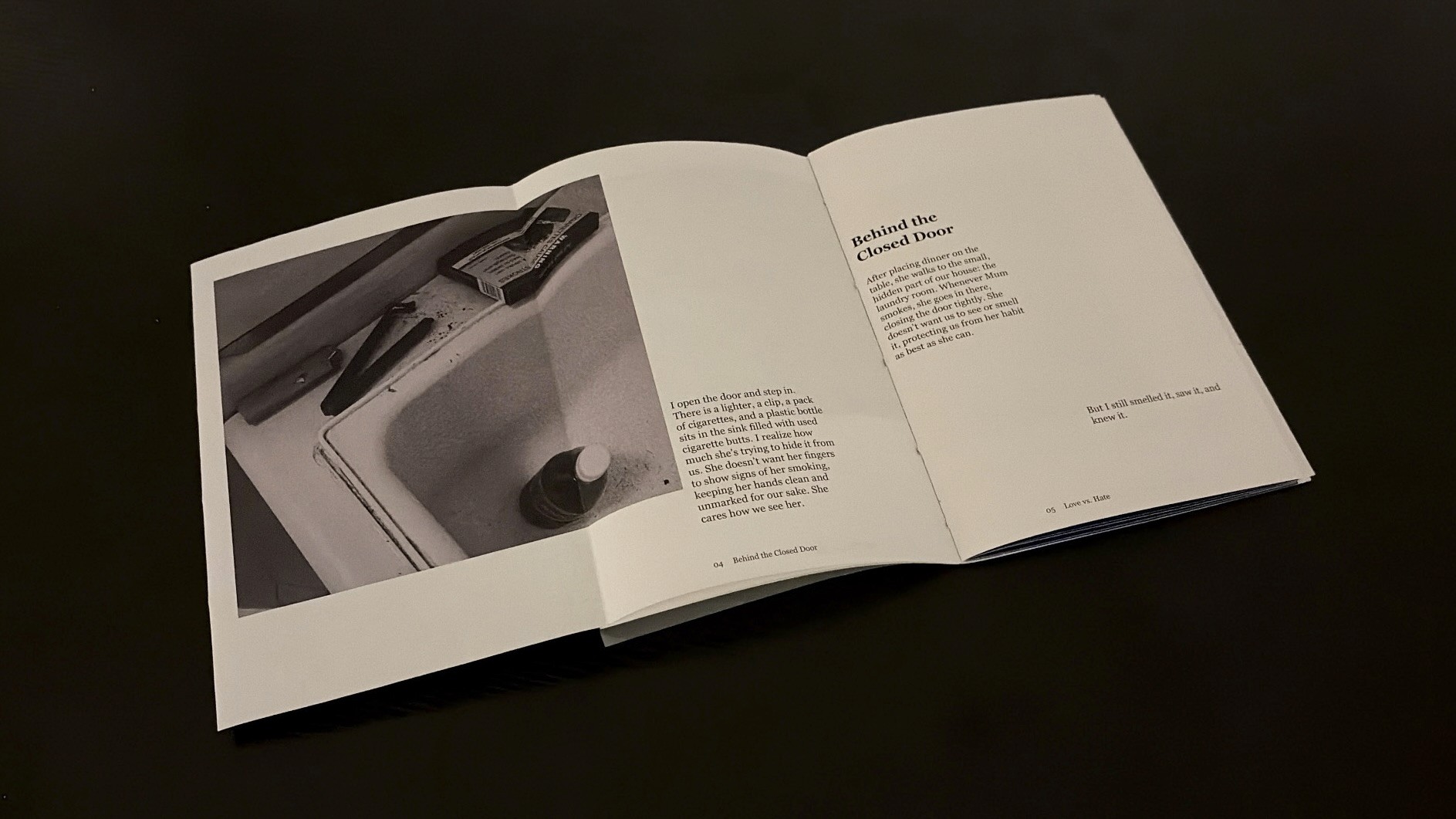
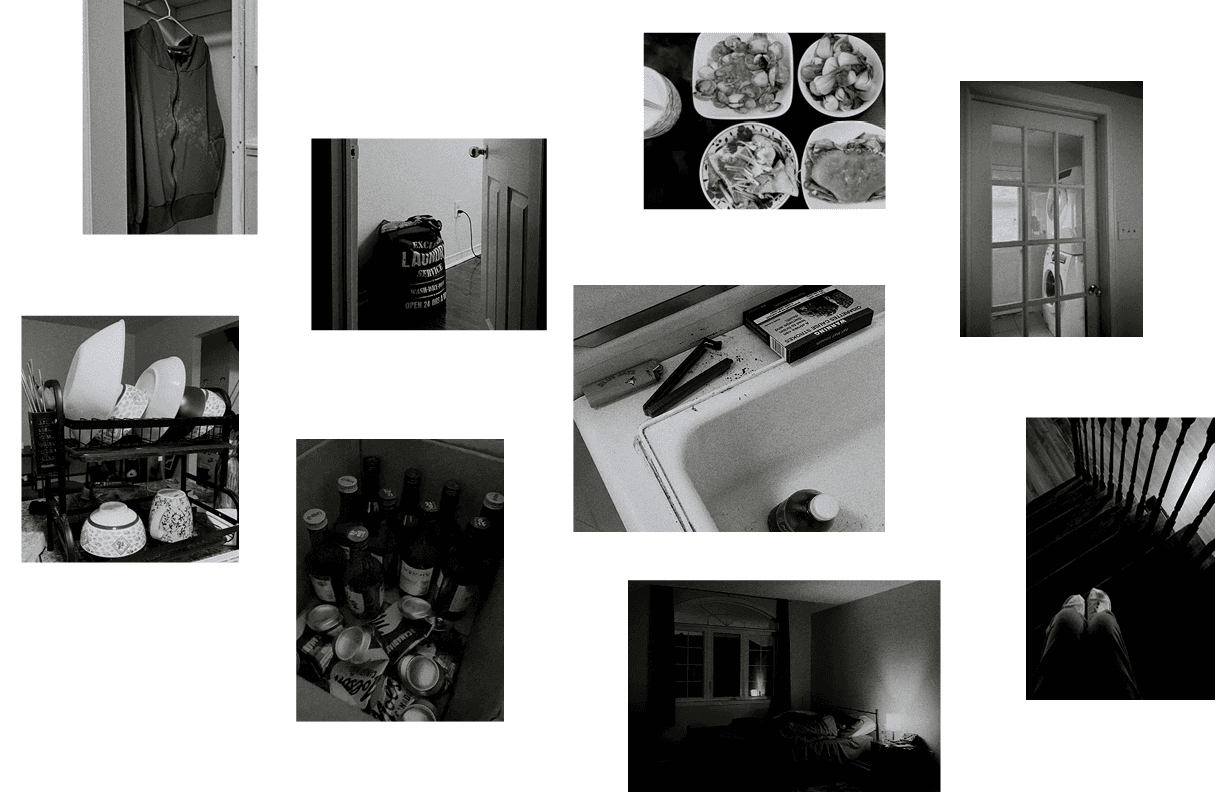
I began by gathering raw materials from my own life, collecting short texts, memories, and everyday images that show both care and harm in a mother–daughter relationship affected by smoking and alcohol. I also reflected on how I communicate with her through written notes and messages instead of direct confrontation, which became a key narrative constraint for the book’s structure.
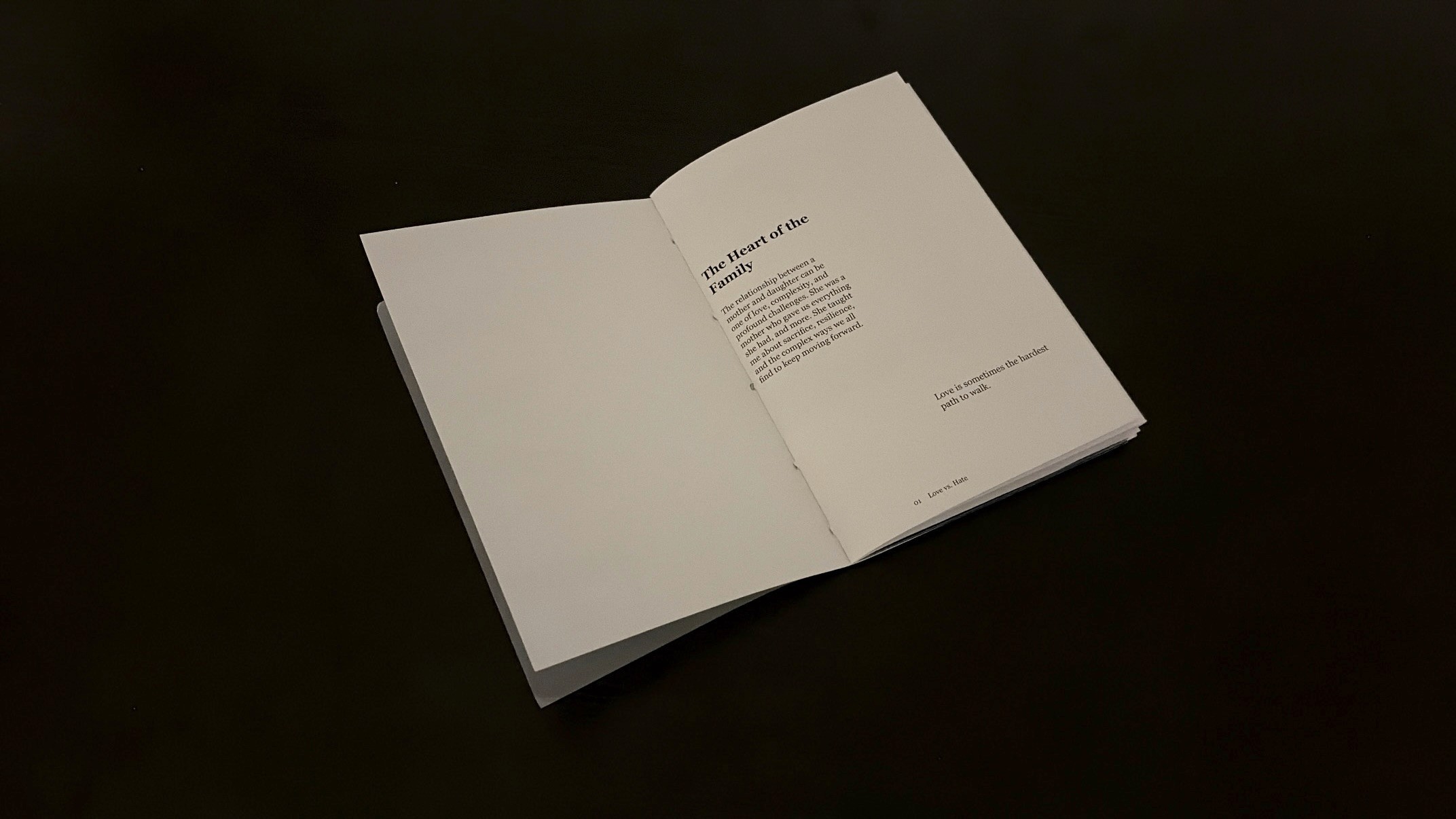
Alongside content collection, I researched different binding formats to find a physical structure that could support the story. Saddle Stitch is chosen as the center-fold of the booklet can lay relatively flat so the display of images across the spread won't be hindered.
Mock-ups
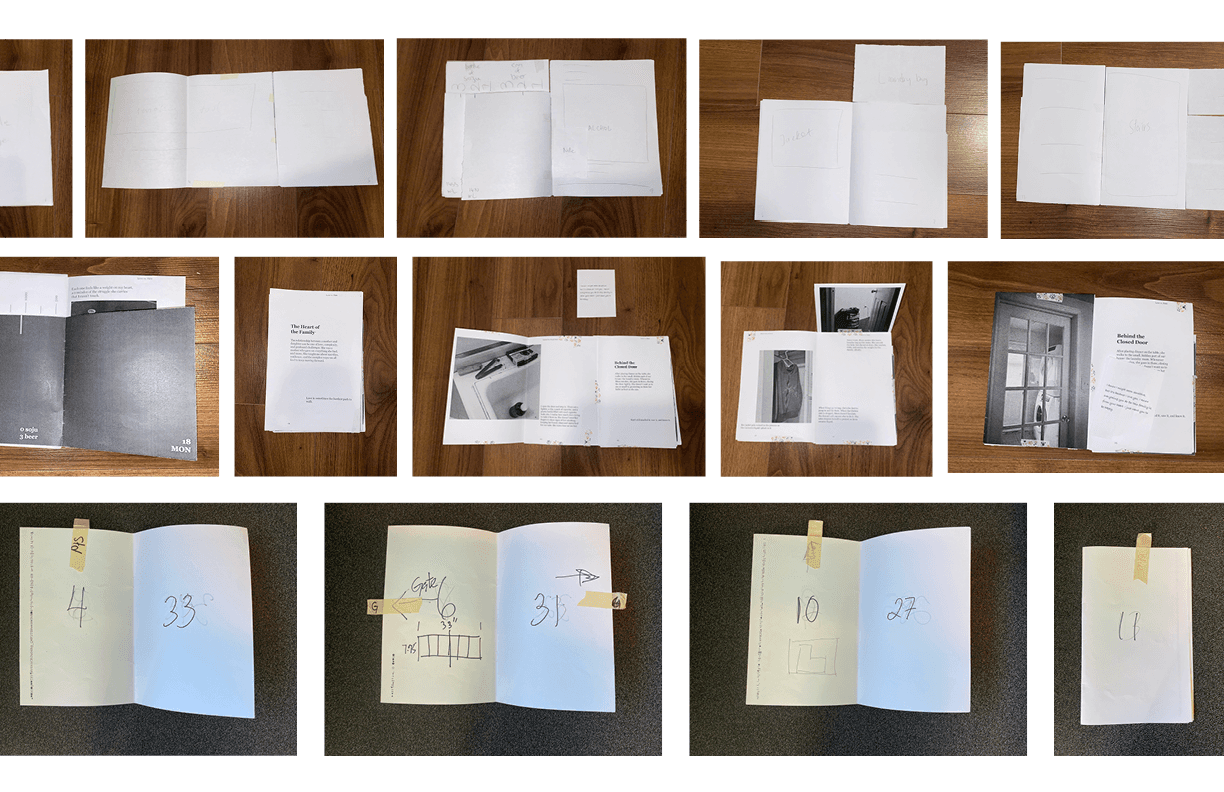
Before moving into InDesign, I built a mock-up using paper and tape to establish the book’s basic structure. I sketched the content layout directly onto each page and labeled page numbers to track sequence. Once I confirmed which content would live on the folding pages and the extra small pages that differ from the standard size, I prepared those sections in separate InDesign files to match their unique dimensions.
After the layouts were designed, I printed single-sided black-and-white tests to check hierarchy and scale. To print this in double-sided accurately, I stapled a blank-page mock-up first, numbered every page, and mapped each spread to understand how the booklet would rearrange during printing and folding. Then, I taped the spreads that needed to print together, removed the staples to separate the taped groups, and used that breakdown to determine exactly how many print files were required and which pages each file contained before printing.
Binding Tests
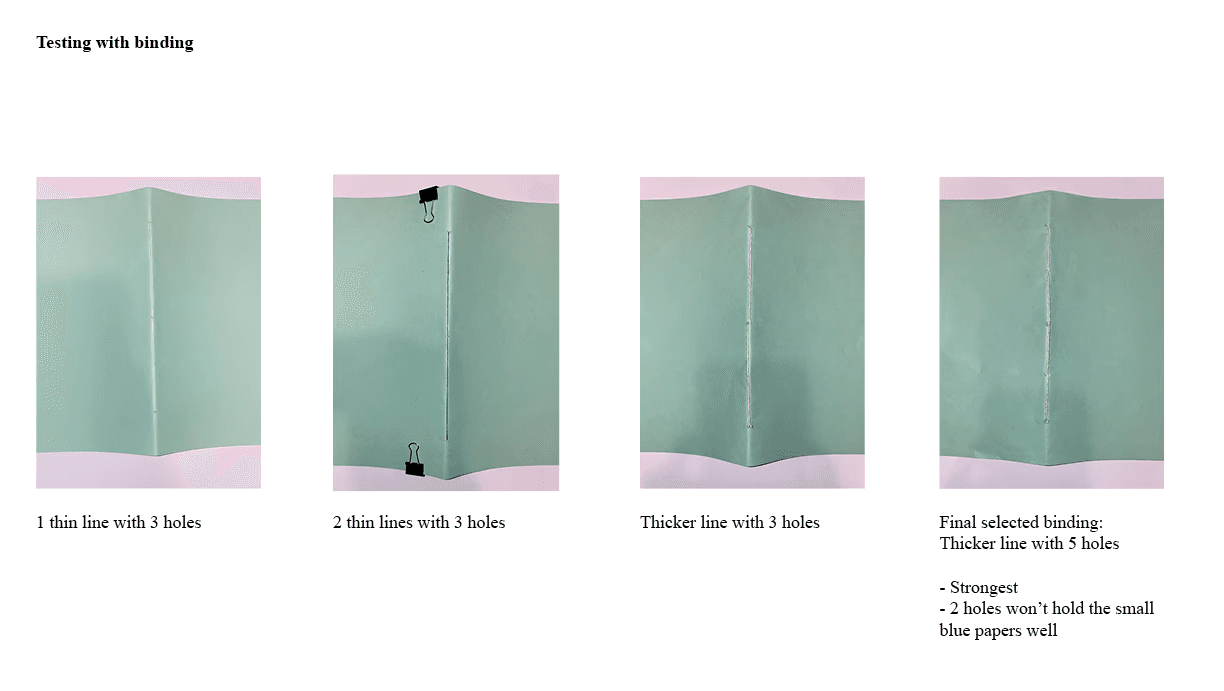
I tested several hand-sewn saddle-stitch variations to replace standard staples, with the goal of improving durability while maintaining a more organic, crafted appearance. After comparing strength, page stability, and visual finish, I selected a thicker thread with five holes as the final binding method. This version provided the strongest hold, secured the smaller blue insert pages more effectively than the two-hole options.
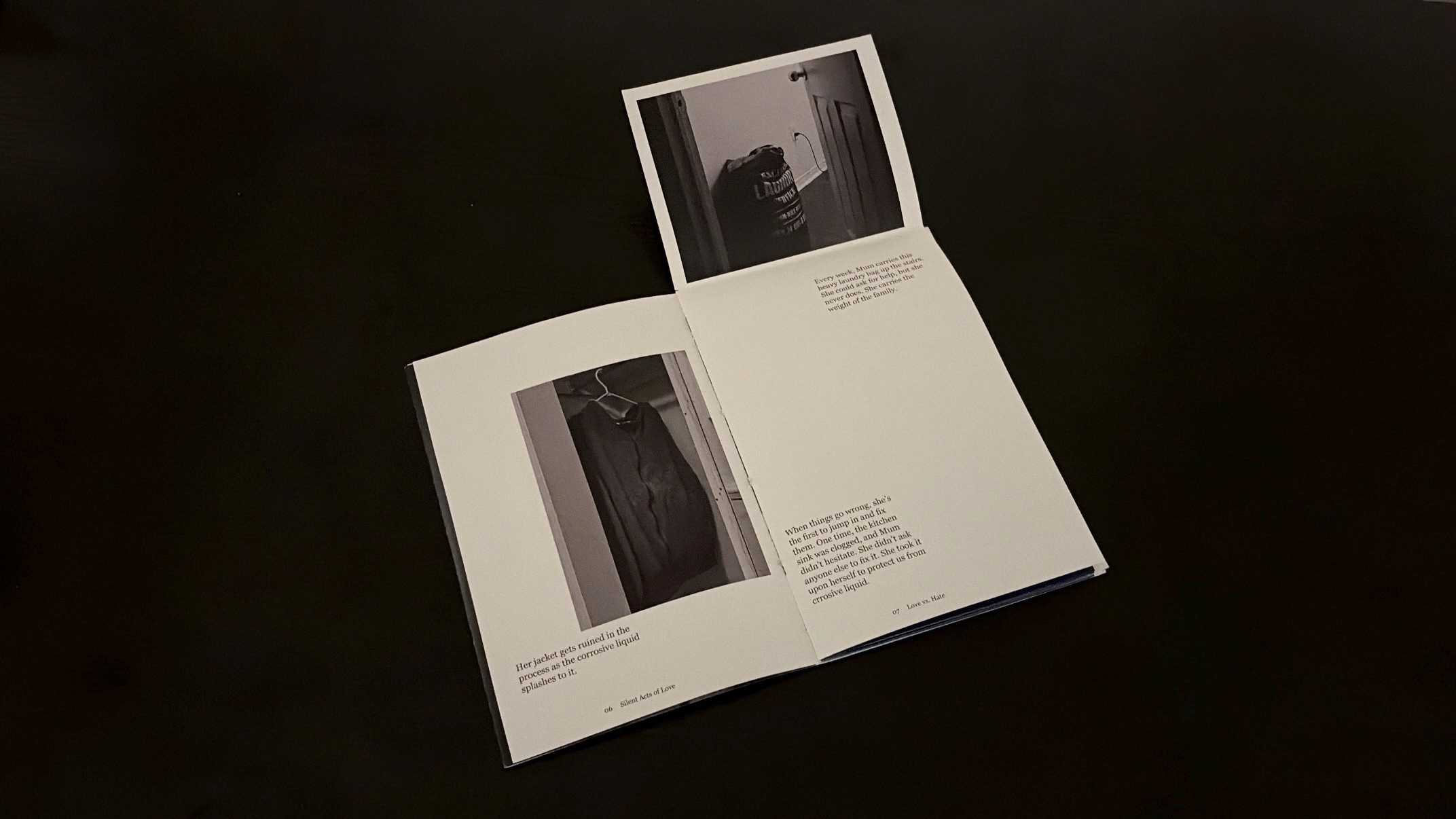
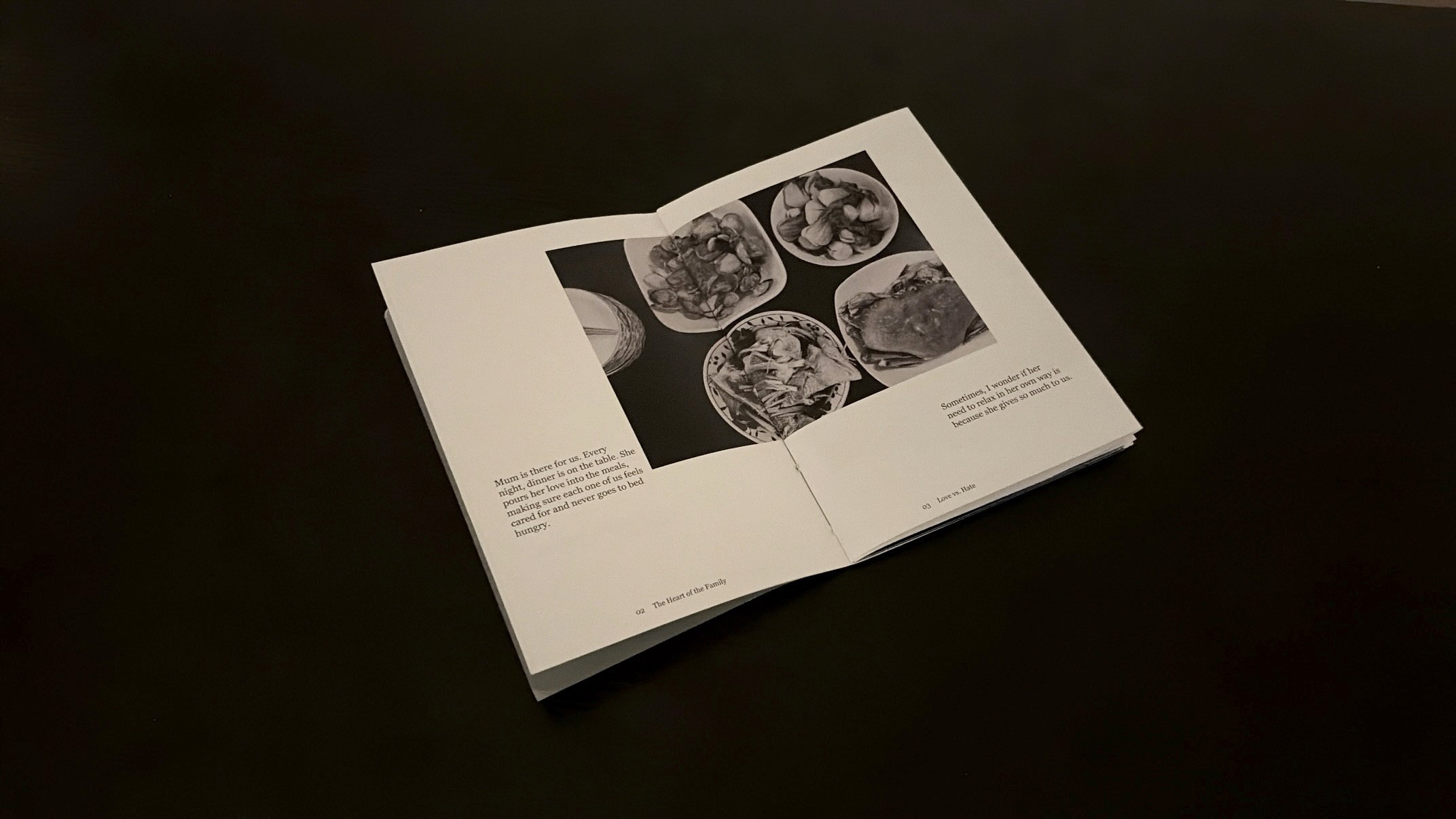
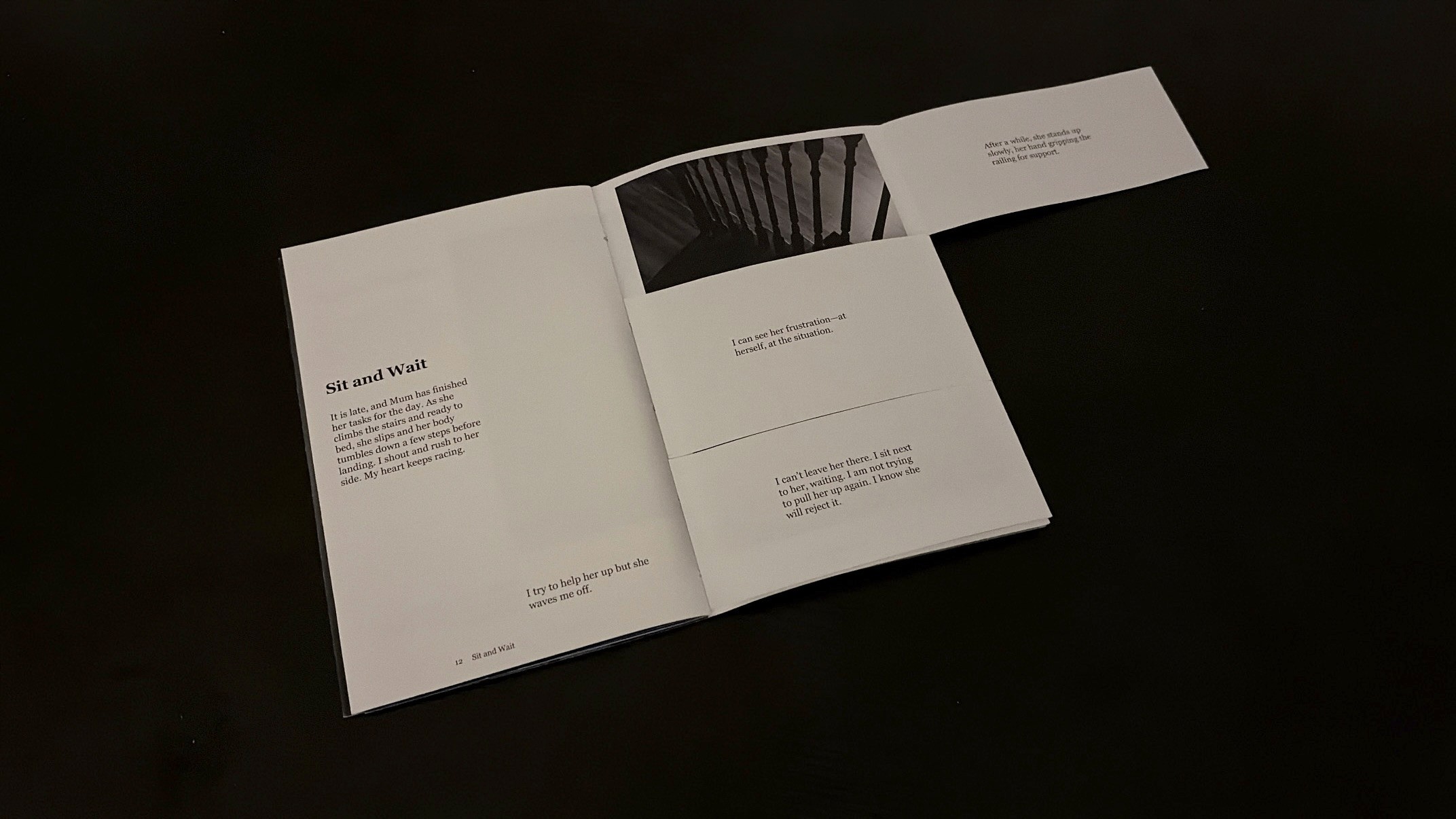
I excluded my mom from the photos and used objects to allow her presence to be felt without showing her face. This reflects how an Asian mother can be central to family yet still be overlooked. It also makes the story more open, so readers may more easily see their own experiences in it. To reflect the complexity of my relationship with my mom, I designed a reading experience that is intentionally challenging in moments by using folded pages to slow the reader down and create a sense of difficulty and emotional weight.
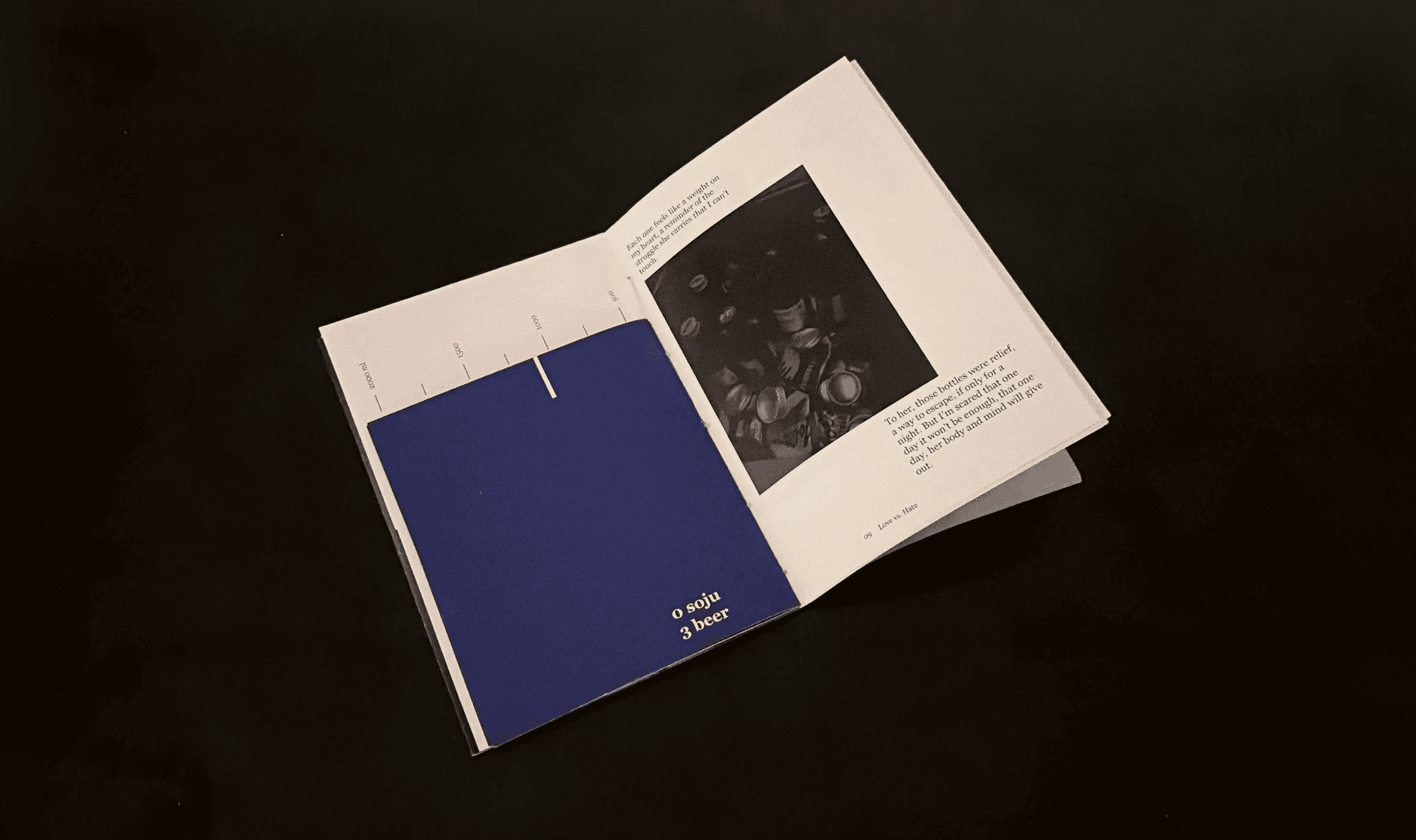
I also included an interactive section to capture the experience of collecting alcohol bottles for my mother to recycle. After a page introducing measurements in mL, readers flip through smaller blue pages that represent the recycling bin, where dates and visual lines show the amount consumed each day. The repeated act of flipping mimics placing bottle after bottle into the bin, making the extent of her drinking physically felt through the reading process.
The main challenge was production because the book includes many pages with different sizes, which the standard book imposition could not be applied cleanly. Different sized inserts interrupt the automatic page reordering that happens in book printing, so I had to separate pages into multiple print files by size and grouping to maintain correct order and alignment after folding and stitching.